Visiting Farming Out of Poverty: A High Impact Model in One of the Most Under Resourced Rural Contexts We’ve Seen
In late February 2025, I traveled to Tormabum, Sierra Leone along with Zahra Radjavi, 3rd Creek Foundation Board Member to visit our Grant Partner, Farming Out of Poverty (FOOP). We wanted to better understand FOOP’s program model and see firsthand how farmers’ lives are changing through FOOP’s work. What we encountered was a remarkably effective, farmer-centered program operating in one of the most under-resourced rural environments we have seen.
An Extremely Resource-Constrained Context
Tormabum sits in a region shaped by decades of challenges. Sierra Leone is still recovering from a brutal civil war, the Ebola crisis, and more recent pandemics, all of which have left deep scars on infrastructure, public services, and economic opportunity. In Tormabum and across rural areas, roads are limited, access to markets is weak, and basic services are scarce. Education levels are very low, adult literacy is limited, and illness can quickly become life-threatening without nearby medical care.
What stood out to us in particular was the depth of asset poverty. In many rural contexts, households rely on livestock for nutrition and savings. In Tormabum, even these basics are largely missing, and livestock that does exist is often in poor condition. This significantly limits households’ ability to generate income, weather shocks, or diversify diets, worsening severe levels of poverty and malnutrition.
While we understood that food security in the region is fragile, we could feel it during our visit. Diets are heavily dependent on rice and cassava, with widespread micronutrient deficiencies despite some households consuming enough calories. This is the environment in which FOOP operates, and against all odds, succeeds.
FOOP’s Integrated Program Model
FOOP clearly understands the constraints farmers face and designed a program model to address them. At the heart of FOOP’s approach is the Service Delivery Unit (SDU). Rather than offering inputs, training, or market access in isolation, FOOP bundles these elements into a single package.
Each SDU includes access to land to farm, quality seeds, fertilizers and other inputs, rental of agricultural machinery, and postharvest processing and storage support. Farmers repay a subsidized portion of the cost, and choose whether to keep their harvest, sell independently, or sell to FOOP, reducing upfront risk while ensuring a path to market.
Increasing Yields and Income
The income effects are especially clear in rice. Prior to joining FOOP, farmers typically produced 300-350 kilograms of rice per hectare. With the $98 rice SDU farmers can produce 950 kilograms per hectare in a good season, generating roughly $250 of revenue. Farmers who sell to FOOP benefit from a stable buyer: the World Food Program.
FOOP also supports farmers in producing beans and vegetables including okra, sweet potato, cucumber, and watermelon. Bean SDUs cost about $40 and can generate around $150 in income. With multiple crop SDUs available costing from $40-$160, farmers spread risk across diversified income streams, reducing vulnerability to weather, pests, and price fluctuations, and boosting nutrition and household resilience.
Building Skills and Long-Term Resilience
FOOP pairs its agricultural support with business, savings, and adult education trainings, often delivered in partnership with local organizations. These sessions help farmers manage income, participate in village savings groups, and make informed financial decisions. In a context of very low adult literacy, these trainings play are critical to increasing agricultural production.
FOOP is also investing in strengthening the entire agricultural ecosystem, through pilot rice research, greenhouse-based training and seedling production, and early efforts to establish a seed bank to improve access to reliable, high-quality seeds.
FOOP has been operating since 2011, spun out of the West African Rice Company, and currently works with approximately 1,800 farmers across 17 villages in the Tormabum area.
Our visit reinforced the view that FOOP is doing high-quality, thoughtful work in one of the most challenging environments imaginable. Their integrated model, strong community relationships, and focus on both income and resilience position them as a rare example of sustained impact in a context where success is hard-won.
Gwen Straley is the Executive Director and Board President of 3rd Creek Foundation
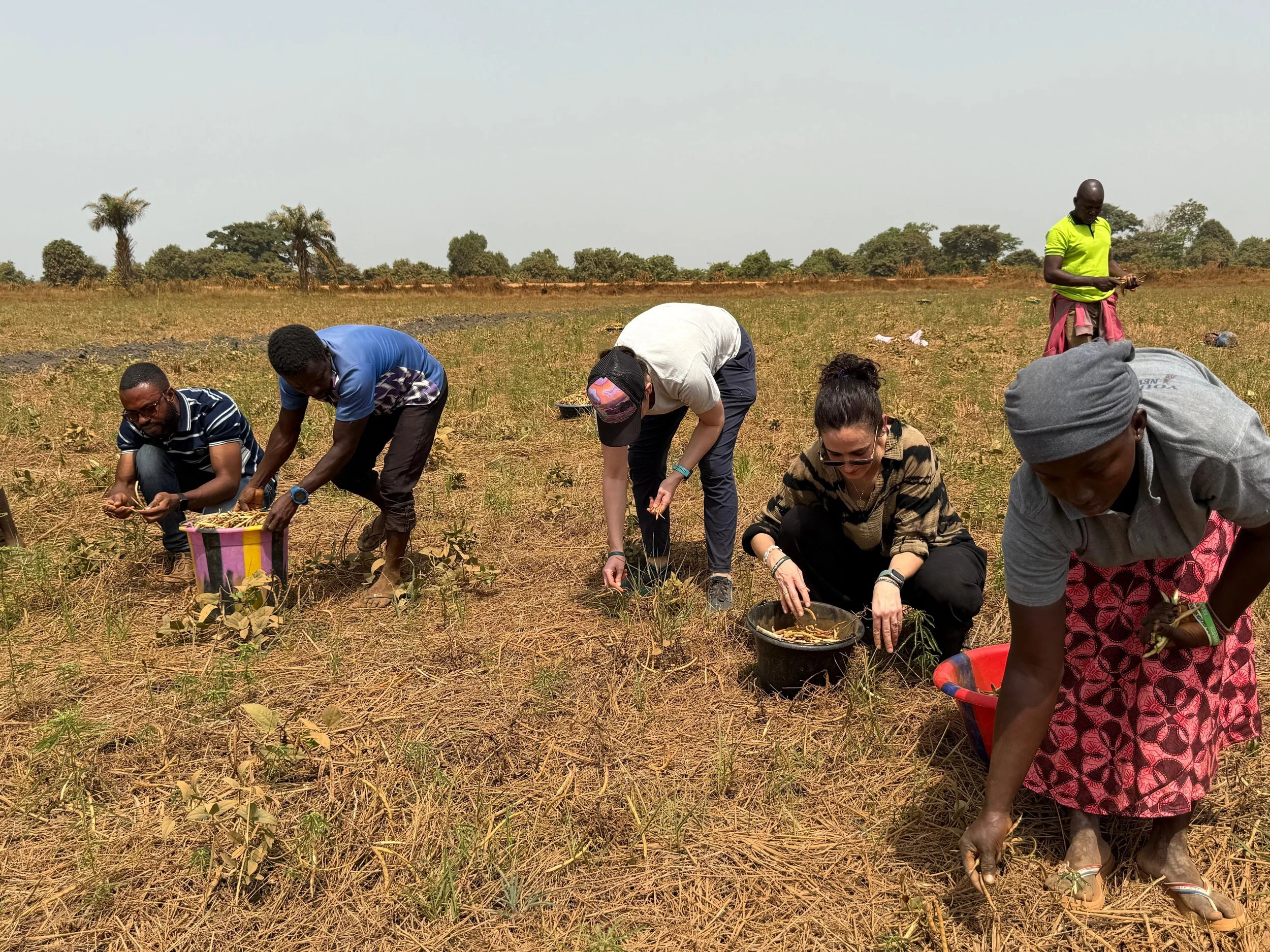
FOOP farmers harvesting with Gwen and Zahra
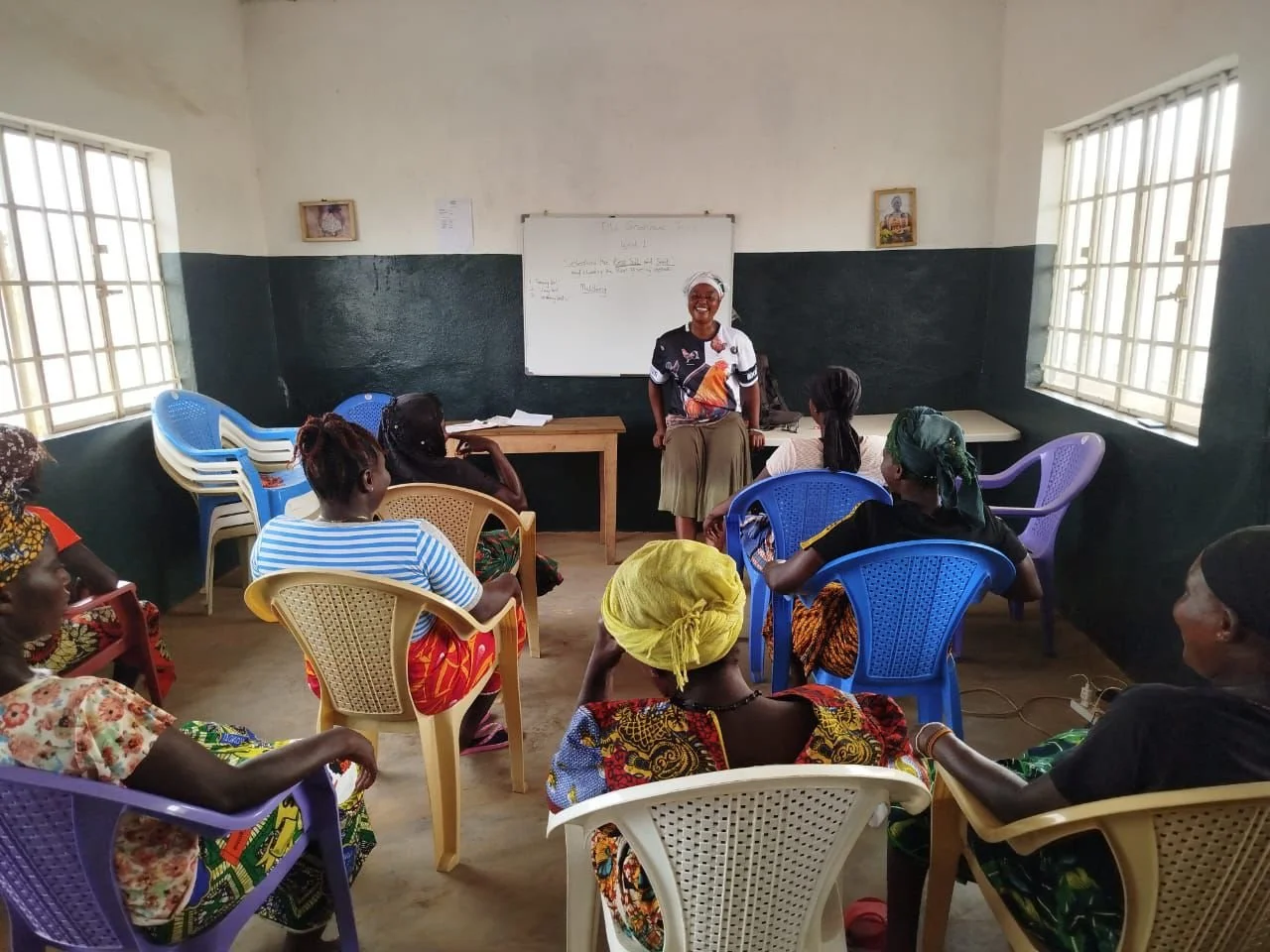
FOOP Farmers attend a training session
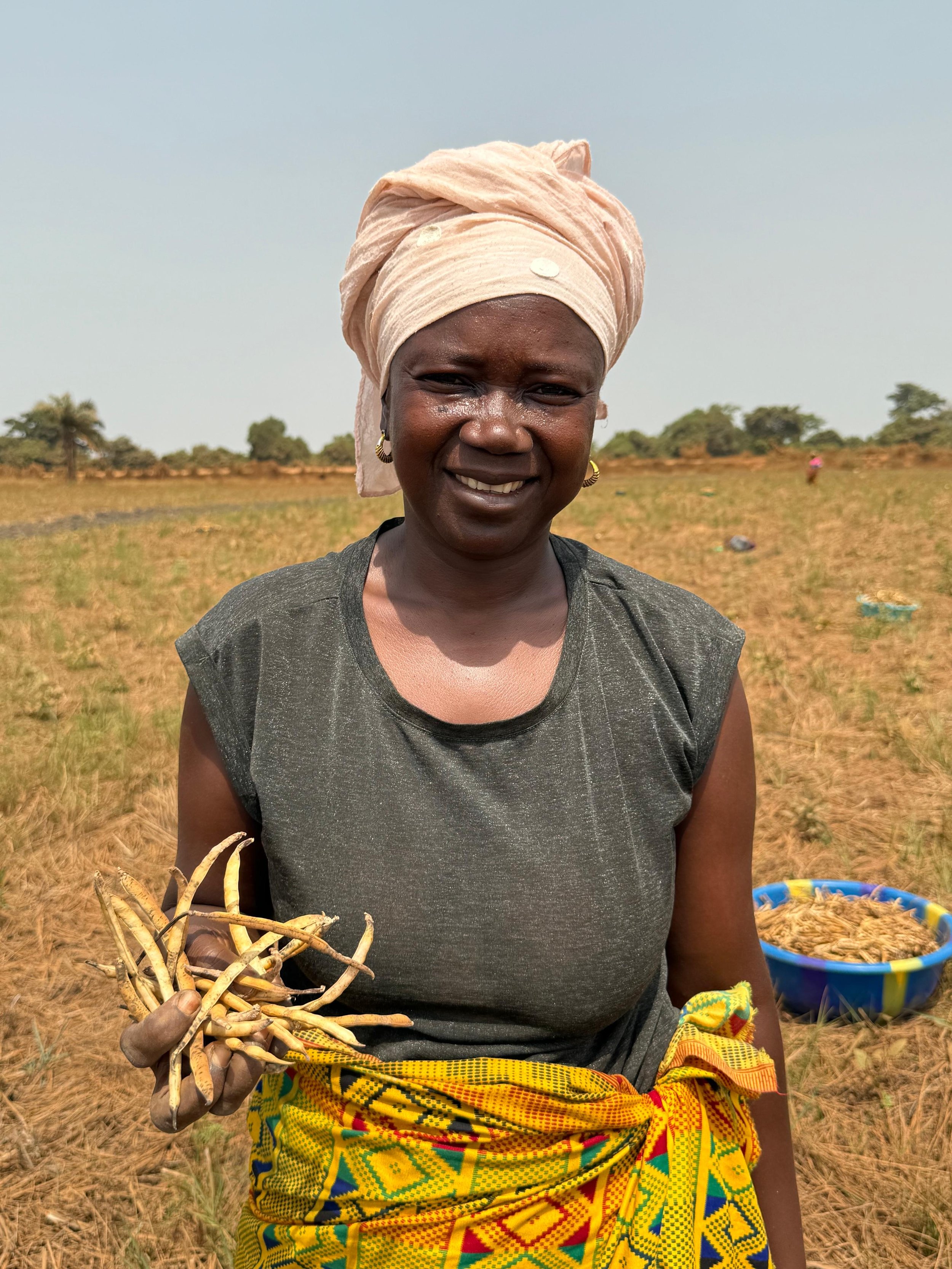
A plentiful harvest for FOOP farmers