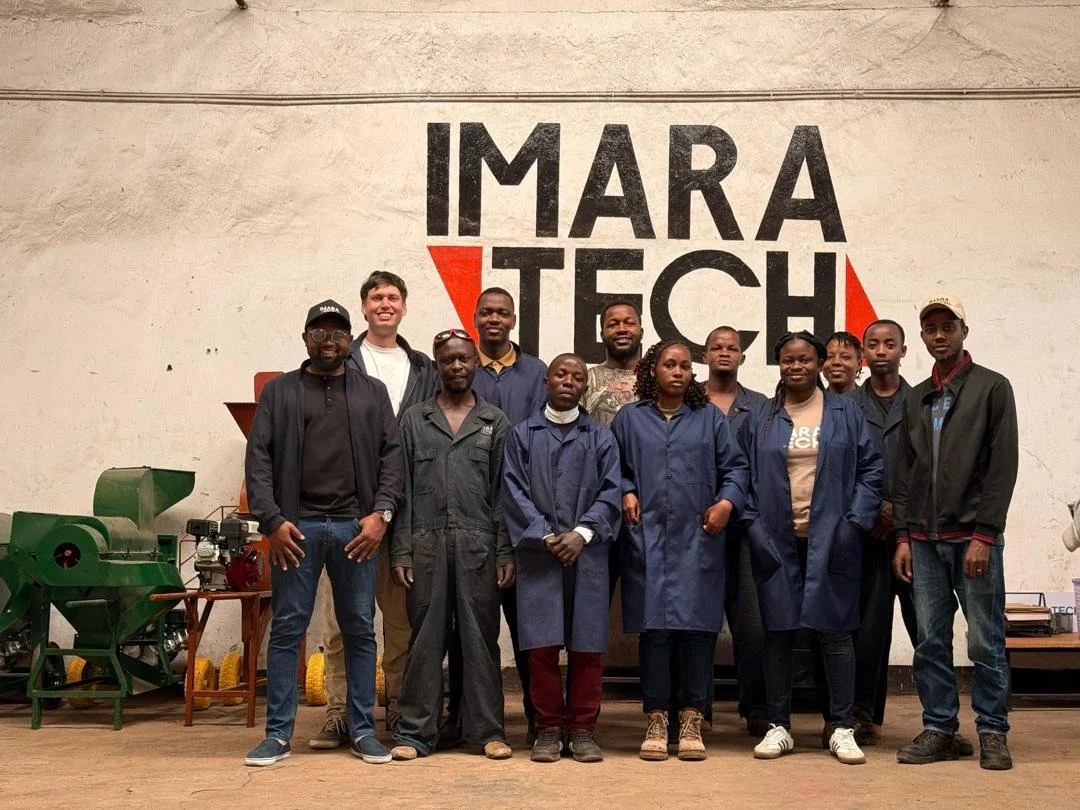
Meet Imara Tech: Bringing agricultural technology to smallholder farmers
Imara Tech is a Tanzanian company on a mission to make agricultural technology available, affordable, and accessible to smallholder farmers. Co-founded by Elliot Avila and Alfred Chengula, the company designs and manufactures equipment that reduces post-harvest labour and helps farmers build sustainable incomes. Imara Tech has been an Impact Investment Partner of 3rd Creek Foundation since 2019. Ani Cammack spoke with Elliot in to learn about what the partnership with 3rd Creek Foundation has meant to Imara Tech.
Ani: To start off, could you tell me why you started Imara Tech and the problem that you were trying to solve?
Elliot: We started Imara Tech to address issues of intensive smallholder labour on smallholder farms. As a student I was designing a technology that would assist women smallholder farmers in post-harvest: reduce labour and reduce losses. At the end of that project, we knew we had something but no one would ever benefit from it. So Imara Tech so people could benefit from these kinds of technologies.
Ani: At what stage did you find 3rd Creek Foundation, and how have things changed for Imara Tech since then?
Elliot: Back in 2019, we found 3rd Creek just after we got things off the ground. We had the opportunity for some grant funding that required us to have sufficient working capital to implement. So 3rd Creek came in and supported us with that investment.
Since then, we've reached profitability, that's number one. We've grown from the small workshop 3rd Creek originally visited to about ten times the production space. At the time of that first partnership, we'd sold around 60 machines, about 10 a year. Now we're at around 1,500 units across all our products.
When 3rd Creek first stepped in we were really trying to be a startup in the sense of pursuing very big growth. Our ambition was to reach every farmer. We'd sold 50 machines but we were trying to sell 5 million. In 2020 we had huge growth and sold around 240 machines. In 2021 we crashed and sold half that, even though we had twice the team. so,we stripped everything back to the fundamentals and focused on just running the business as a small business. That's where 3rd Creek stepped in again, as a term loan over a five-year period.
"Having investors who, when we were at our lowest point, were willing to say "we'll give you some capital to try this out and make it work", I think we wouldn't have gotten through that period without that. "
More recently, another reinvestment enabled us to unlock a lot more grant funding, unrestricted, so we can use it for CapEx, for operations. It came up very last minute and Gwen managed to get it done in a five-week timeline, which is amazing.
Ani: That's a remarkable pivot. Thinking more about the farmers you serve — what does working with Imara Tech mean to them? How does it change their lives?
Elliot: Our farmers talk about opportunity. I think that is what stands out to me the most. Smallholder farming is something that is just not sustainable with the way the world is going — no one wants to do it. It's hard. Young people have no interest in it, they see no future in it. It’s not really the kind of job you would pick by choice.
"What we see with the equipment we sell is that someone can make an income out of it, they can earn their money back really quickly. They're using that money to invest in their businesses, their house, their families, their farm. It changes what it means to live in a rural area in Tanzania and live on a farm, from something we'd associate with poverty or really hard conditions to: this is a job that generates income, it's modern, it creates opportunity. "
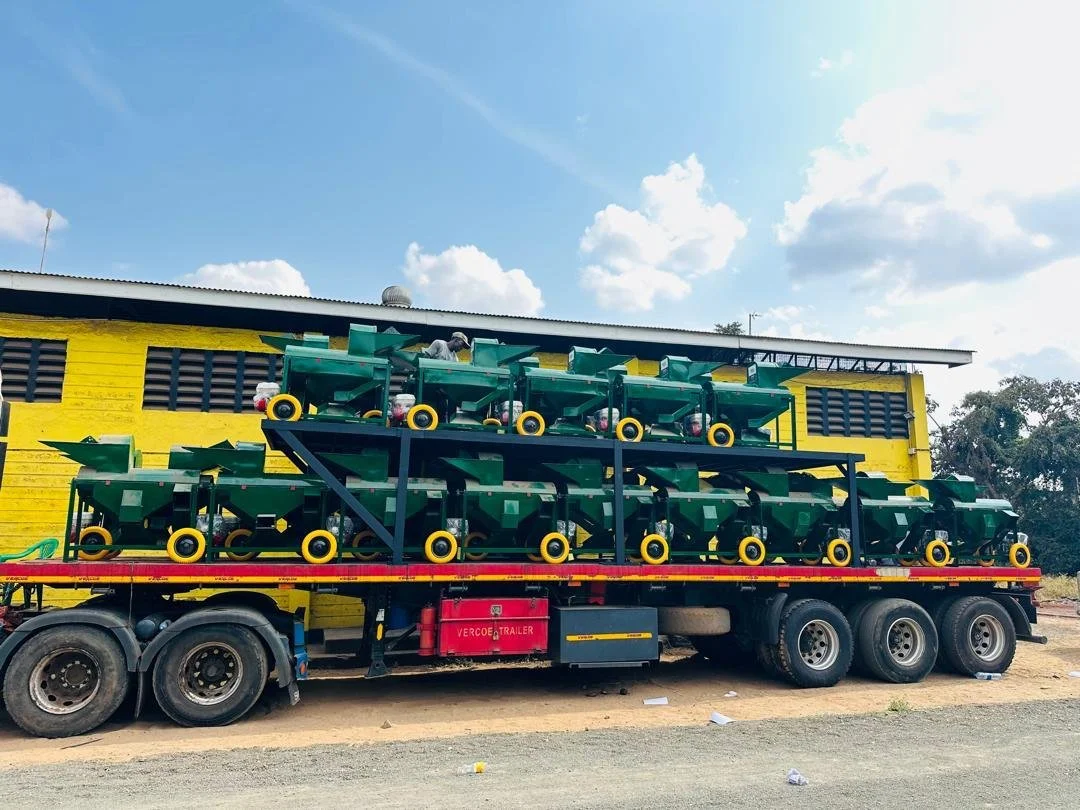
We’ve begun selling our machines in DRC [Democratic Republic of the Congo]. There's obviously conflict and poverty going hand in hand and reinforcing each other there. For us to be able to send machines and provide training to youth and women in Eastern Congo is a milestone for us, and it's totally aligned with the impact we're trying to have. Even though it's only 100 machines, there are 5,000 farms at least that will be using these machines and now practising agriculture in a much more modern way.
The issue we're trying to tackle is not new, but the pace of change can be extremely rapid. Someone gets one of these machines and within a year they're building a modern home, they're investing. It's not the work of decades. It can happen really quickly, with a relatively modest business playing a role in that.
Ani: That’s wonderful to hear. You've touched on this, but what would you say has been the biggest challenge of building Imara Tech?
Elliot: I think the biggest challenge has been understanding the pathway that our company had to grow to really achieve its goals. Changing our expectations and focusing on the business and its fundamentals has been the best decision we've made. I feel like we've achieved a lot, and we've built it in a way that can sustain itself and keep growing. We still have a big task ahead, but it feels like we've also set ourselves up to address it.
Ani: And what obstacles do the farmers you work with still face? Are there other challenges you're trying to address?
Elliot: There's a lack of mechanization across all the different parts of farming. We've focused primarily on post-harvest, and we're also trying to get into the planting side of things, because that's still done manually.
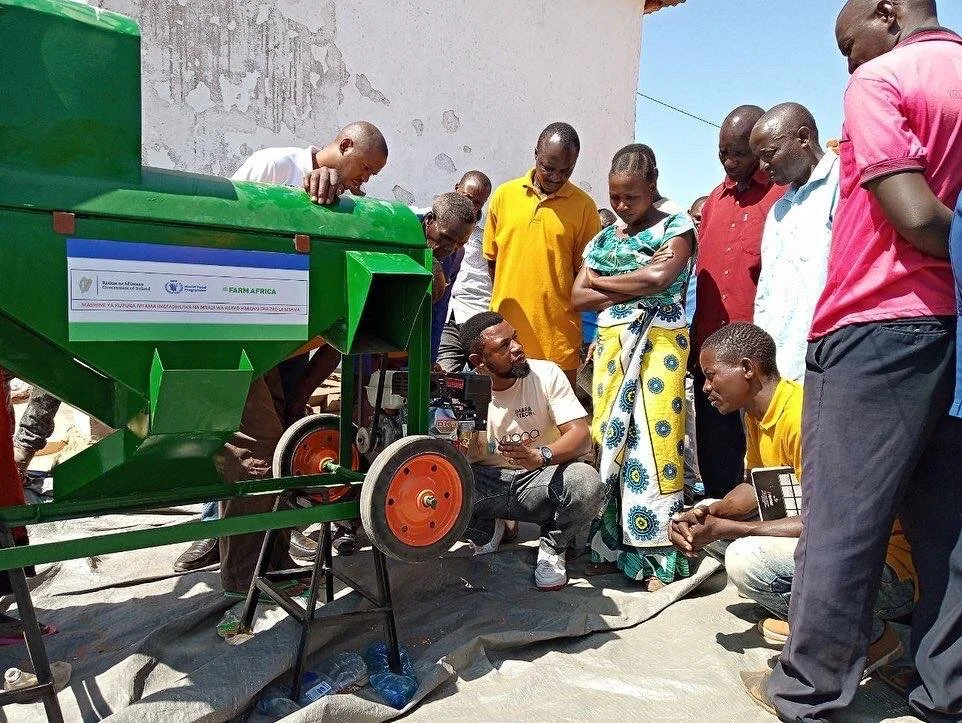
There's a technological need driven by a lack of awareness. So when we sell machines — often with partners — we'll organize trainings to sensitize people about what this technology does and how it can be impactful and then teach them how to use it mechanically and also as a business.
Affordability is still a barrier. We have partners that offer finance and partners with projects that subsidize the equipment. The Congo machines were subsidized through a programme where farmers paid 20% of the cost and the other 80% was covered.
Ani: We were so excited to hear you were working in Congo. Thinking to the future, what's your vision for the farmers you work with?
Elliot: I don't think smallholder farming in its current form can or should exist decades from now. I think every farm in the future will be mechanized, and we have a role to play in making those technologies available, affordable, and accessible.
"For the farmers, it's about seeing small-scale agriculture transform from a subsistence-associated activity to small-scale commercial enterprises that provide a dignified livelihood — a way for people to work, develop their families, and develop their lives. A dignified livelihood is one where you earn an amount that allows you to invest in yourself and your future — where you're actually growing opportunities and you are proud of the work and the contribution you make"
I think both of those things are things our customers get. They're able to pay off their product within a season, some of them multiple times over. And they're doing so by providing this service to their entire community.
"One person gets the product, and for them it's a business, and yet the whole community can actually benefit from it. It's cool to be that provider where everyone gets a piece of the machine. "
Ani: What would you say to anyone who’s thinking about investing in a company like Imara Tech?
Elliot: I would say that even a small amount of money can make a difference. It's thanks to investors like 3rd Creek that we've been able to build this company that brings a solution to something which has gone unaddressed. Looking at Imara Tech, building a company that sells machines for rural Tanzania is not the first place where many people would look, and yet there's an opportunity there, both for supporting small businesses locally and for creating this huge amount of impact. And it doesn't take very much to unlock those opportunities and provide those chances.
To learn more about Imara Tech visit https://www.imaratech.co/